
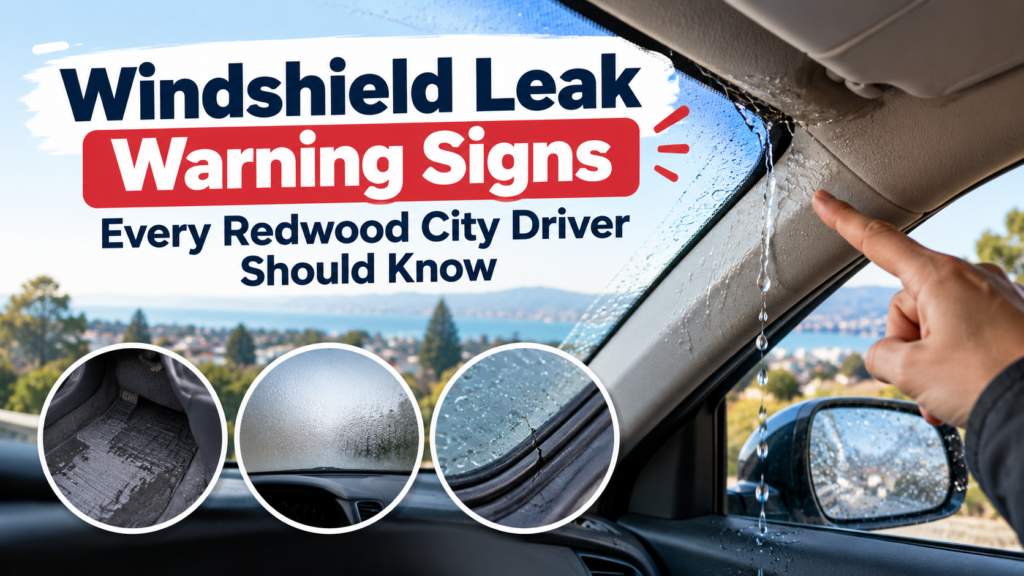
A Windshield Leak Warning Signs Redwood City does far more than keep bugs and wind out of your face. It supports the roof in a rollover, gives the passenger airbag a surface to push against, and forms a watertight seal around the cabin. When that seal weakens, water finds its way in, and it rarely announces itself with a dramatic drip. More often a leak starts quietly, with a faint smell, a patch of fog, or a stain that appears and disappears with the weather.
For people who drive around the Peninsula, the stakes are a little higher than they might seem. Redwood City sits on the bay side, where wet winters, morning fog, and salty humid air all put steady pressure on the rubber and adhesive around the glass. Knowing the early signals of a failing seal can save a lot of interior damage later. This guide walks through the most common windshield leak warning signs in Redwood City, why they happen, how to tell them apart from other water problems, and what the leak means for vehicle safety.
How a Windshield Is Supposed to Seal
Most modern vehicles do not hold the windshield in with a rubber gasket the way older cars did. Instead, the glass is bonded to the body with a thick bead of urethane adhesive that runs around the full edge. That adhesive does two jobs at once. It keeps water out, and it acts as a structural joint between the glass and the metal frame, which is called the pinch weld.
When the bond is sound, there are no gaps, no voids, and no spots where air or moisture can pass. When the bond is damaged, aged, or was never perfectly laid down, even a hairline channel is enough. Water follows gravity and surface tension along that channel, then appears somewhere far from the actual opening. That is why leaks are so hard to trace by sight alone, and why paying attention to the symptoms matters more than hunting for a visible hole.
Sign One: Damp Carpets and a Musty Smell
The most common first sign is a smell. A cabin that smells like a damp basement, especially after rain or a foggy morning, often points to moisture hiding under the carpet or behind a trim panel. Because the floor is the lowest point in the cabin, water that enters near the base of the windshield tends to run down the dashboard structure and settle in the front footwells.
Press your hand firmly into the carpet under the dash on both sides. If it feels cool, spongy, or wet when the weather has been dry for days, water is getting in somewhere. Windshield leaks are only one possible source. Clogged air conditioner drains, blocked cowl drains, and worn door seals can all produce the same symptom, so a damp carpet is a reason to investigate rather than a diagnosis by itself.
Sign Two: Water Stains on the Headliner or A-Pillars
The headliner is the fabric that covers the ceiling, and the A-pillars are the angled posts on either side of the windshield. Brown or yellow rings on the fabric near the top corners of the glass are a classic indicator. Water that gets past the upper edge of the seal soaks into the foam backing of the headliner, then leaves a stain as it dries.
Sagging fabric, a bubbling texture, or a faint tide line near the sun visors deserves a closer look. If a stain grows after each rainy spell, the source is active. If it stays the same size, it may be old damage that has since stopped. Marking the edge of a stain lightly with a pencil and checking it after the next storm is a simple way to tell the difference.
Sign Three: Fogging That Will Not Clear
Interior fogging is normal on a cool morning. Fogging that returns constantly, even when the cabin is warm and dry, suggests there is excess moisture inside the vehicle. A leaking windshield can feed that moisture slowly, because damp insulation and carpet release water vapor into the air every time the heater runs.
If the inside of the glass keeps misting up, if the defroster takes noticeably longer to clear it, or if a thin film builds up on the dashboard plastic, the cabin may be holding more water than it should. Running the air conditioner with the recirculation setting off pulls out humidity, but if the problem returns within a day or two, the moisture is being replaced from outside.
Sign Four: Whistling or Wind Noise at Speed
An air gap and a water gap are usually the same gap. A new whistle, hum, or rushing sound around the windshield at highway speeds, such as on Highway 101 or Interstate 280, can mean the adhesive bead has a void. Air is forced through it at pressure, which creates the noise.
The sound often changes with speed or with a crosswind. It may be louder on one side than the other. Drivers sometimes assume it comes from a side mirror or a roof rack, so it helps to notice whether the noise appears only at the front of the cabin and whether it was absent when the vehicle was newer. A windshield that was once quiet and is now noisy has likely lost some of its seal.
Sign Five: Visible Gaps, Gummy Residue, or Lifted Trim
Some leaks can be seen with careful inspection. Look along the edge of the glass where it meets the body, from outside and inside. Warning signs include:
- A dark line or gap between the glass and the paint where the two should meet tightly
- Black adhesive that looks cracked, shrunken, or pulled away from the glass
- Trim molding that has lifted, bent, or moved out of place
- Dried residue or a white mineral crust along the lower edge of the glass
A thin gap near the base of the windshield, under the cowl panel at the bottom of the glass, is especially worth checking because rain runs straight toward it. If the molding looks loose when you press gently on it, the seal behind it may be compromised as well.
Sign Six: Rust Along the Frame
Rust is one of the more serious long-term consequences of a leak, and it can also be a cause. Bare steel at the pinch weld begins to corrode when moisture sits against it. Once the metal flakes, the adhesive has nothing solid to grip, and the leak gets worse.
Surface rust that appears as orange or brown spots around the windshield edge, or bubbling paint along the frame, suggests that water has been present for some time. In coastal and bay areas, salt in the air speeds this process up. Catching it early matters because corrosion that spreads into the structure is much harder to deal with than a surface problem.
Sign Seven: Electrical Oddities
Water that runs down behind the dashboard can reach wiring, fuse panels, and control modules. Strange electrical behavior is sometimes the first sign of a leak that has been hiding for months. Examples include flickering dash lights, a radio that cuts out in the rain, intermittent warning lights, or power windows that act up only in wet weather.
Because electrical faults have many possible causes, they are rarely blamed on the windshield at first. A pattern is the clue. If the problem only shows up after rain or a car wash, moisture is probably involved.
Why Windshield Leaks Develop
Understanding the cause helps explain why leaks often come back if the underlying issue is not addressed. The most common reasons include:
Age and sun exposure. Urethane is durable, but years of heat and ultraviolet light can make it brittle. Bay Area drivers who park outdoors all year are exposed to a long cycle of morning dampness followed by afternoon sun, which gradually fatigues the adhesive.
Poor installation. If a windshield was previously replaced and the surface was not cleaned thoroughly, if primer was skipped, or if the bead was applied with gaps, the bond may never have been complete. These leaks often appear within the first year.
Rust under the glass. Corrosion lifts the adhesive from below. Even a perfectly good bead fails when the metal under it is rotting.
Cracks and chips near the edge. A crack that runs to the border of the glass can open a path through the glass itself or break the adhesive bond around it. Edge chips are particularly prone to spreading because the glass is under more stress near its perimeter.
Physical stress. Body flex, potholes, a collision, or even a hard door slam can crack or stretch the bond over time.
Blocked cowl drains. Leaves and debris collect in the channel under the base of the windshield. When the drain clogs, water pools and finds the weakest point to enter, even if the windshield seal itself is fine. This is a common look-alike for a true windshield leak.
How to Check for a Leak Safely at Home
A simple water test can narrow down the source without any special equipment. Have a helper sit inside the car with a flashlight while you slowly run water from a garden hose over one section of the windshield at a time. Start low, near the base, and work upward, because starting at the top can confuse the results by letting water run down over the area you tested earlier.
Keep the water at gentle flow rather than high pressure. A hard jet can force water through seals that would normally hold, producing a leak that would not happen in ordinary rain. The person inside should watch for drips at the dashboard, the upper corners, and the base of the A-pillars. If the cabin stays dry after each section, the windshield is probably not the source, and the cowl drains or door seals become more likely suspects.
It also helps to check the drain areas visually. Lift the hood and look at the plastic cowl at the base of the glass. Wet leaves, needles, and dirt packed into this area are a quick explanation for a surprising amount of cabin moisture.
Why a Leaking Windshield Is More Than a Nuisance
It is easy to treat a small leak as an annoyance, but the consequences extend well beyond a wet floor mat.
Structural role. In a frontal collision, the windshield helps the passenger-side airbag deploy in the right direction, and it contributes to the strength of the roof in a rollover. A weakened bond reduces how well the glass performs those jobs.
Mold and air quality. Moisture trapped under carpet and padding is an ideal place for mold and mildew. These can irritate the lungs and are particularly noticeable for people with allergies or asthma. Once mold takes hold in foam padding, removing it fully is difficult.
Electrical and sensor damage. Many newer vehicles mount cameras, rain sensors, and driver assistance components behind the glass. Moisture near these parts can cause errors and, in some cases, permanent damage.
Corrosion. Steel that stays wet will rust. The longer a leak is active, the more likely it is that corrosion will spread along the pinch weld and into areas that cannot be seen.
Visibility. Water between layers of glass, or a failing edge seal that allows fogging, can interfere with clear sight through the windshield, particularly at night.
Weather Patterns That Make Leaks Easier to Notice
Redwood City has a mild climate, but its rain tends to arrive in concentrated bursts between late fall and early spring. The first heavy storm after a long dry summer is often when a hidden weakness shows itself. Dry months allow adhesive to shrink slightly and dirt to pack into small gaps. When the rain returns, water gets into those openings immediately.
Fog adds another layer. Marine moisture condenses on the glass and runs to the lower edge, where it sits in the cowl area for hours. Vehicles that park outdoors overnight spend a long time in these damp conditions, so even a small flaw in the seal gets steady exposure. Car washes can also expose a leak because the high-pressure spray reaches angles that rain does not.
Drivers who notice symptoms only after a storm or a wash should note when and where the water shows up. That information is useful because it points to a particular section of the seal.
Common Mistakes When Dealing With Leaks
A few habits tend to make a leak harder to solve.
- Ignoring early signs. A faint smell or small stain is easy to dismiss, but the damage underneath is already underway.
- Applying sealant over the problem. Over-the-counter silicone or caulk placed on the outside can trap water behind it and cover the evidence needed to find the true entry point.
- Drying only the surface. Drying the top of the carpet while leaving the padding wet allows mold to grow underneath. Padding and insulation need to dry completely.
- Assuming the leak is the windshield. As noted earlier, drains, sunroof channels, door seals, and heater components can all cause similar symptoms.
Frequently Asked Questions
How can I tell if my windshield is leaking or if the water is coming from somewhere else?
The location and timing of the water give the best clues. Water at the top corners of the dashboard or on the headliner near the glass points toward the windshield seal. Water in the footwell only after heavy rain may point to the cowl drain or door seals. Water that appears only when the air conditioner runs usually indicates a blocked evaporator drain. A controlled water test helps separate these sources.
Is it safe to drive with a leaking windshield?
A slow leak may not make the car unsafe to drive immediately, but it can signal that the bond between the glass and the frame has weakened. Since that bond contributes to airbag performance and roof strength, a leak should not be ignored for long. Moisture near electronics is another reason to treat it as more than a cosmetic issue.
Can a windshield leak cause mold inside the car?
Yes. Water that soaks into carpet padding and insulation can remain damp for weeks, which allows mold to develop. A persistent musty smell is often the first sign. Drying the interior thoroughly is just as important as finding the source of the water.
Why does my windshield leak only when it rains heavily or when I use a car wash?
Small gaps in the seal may only admit water when the volume or pressure is high. Light rain runs off the glass without lingering, while heavy rain and wash jets push water into tiny openings. Intermittent leaks are common and often get worse over time as the gap widens.
Does a cracked windshield always leak?
No. Many cracks stay sealed because the damage is within the glass layers and the adhesive bond is intact. A crack that reaches the edge, however, can disrupt the bond and allow water to enter. It can also keep spreading as the temperature changes, which makes it more likely to turn into a leak path.
How long does a windshield seal normally last?
There is no fixed lifespan. With good installation and a sound frame, the bond can last as long as the vehicle. Sun exposure, rust, previous repairs, and physical stress all shorten that timeline, which is why older vehicles and those parked outdoors tend to show problems first.
What are the first signs of a windshield leak?
The earliest signs are usually subtle. They include a musty smell, fogging that keeps returning, a faint stain at the top corner of the headliner, or a new whistle at highway speeds. Noticing these early gives you the best chance of limiting damage to the interior.
Final Thoughts
Windshield leaks are rarely dramatic at the start. They tend to build through small clues: a damp smell after the first winter rain, a stain near the corner of the roof, a strange hum on the freeway. Each clue on its own is easy to wave away, but together they usually tell a consistent story about a seal that is failing.
For anyone watching for windshield leak warning signs in Redwood City, the practical habits are simple. Notice changes in smell and moisture, check the drain areas before blaming the glass, use a gentle water test to narrow down the source, and treat any leak as a structural matter rather than just an interior one. The earlier the cause is understood, the less moisture, rust, and electrical trouble a vehicle has to endure.